Why automation? The numbers don't lie
Poultry farming in India is one of the fastest-growing agricultural sectors, yet most small and medium farms still rely on manual labour for feeding, watering, ventilation, and health monitoring. This leads to inconsistent outputs, high feed wastage (often 12–18%), and preventable mortality — all of which directly eat into margins.
Automation doesn't mean replacing every worker with a robot. It means deploying the right sensors, feeders, and controllers to make your existing operation run like a well-oiled machine — 24 hours a day, with data you can actually act on.
The six automation pillars
Profitable automation focuses on these interconnected areas. Address even two or three of them and you'll notice the difference in your next batch's bottom line.
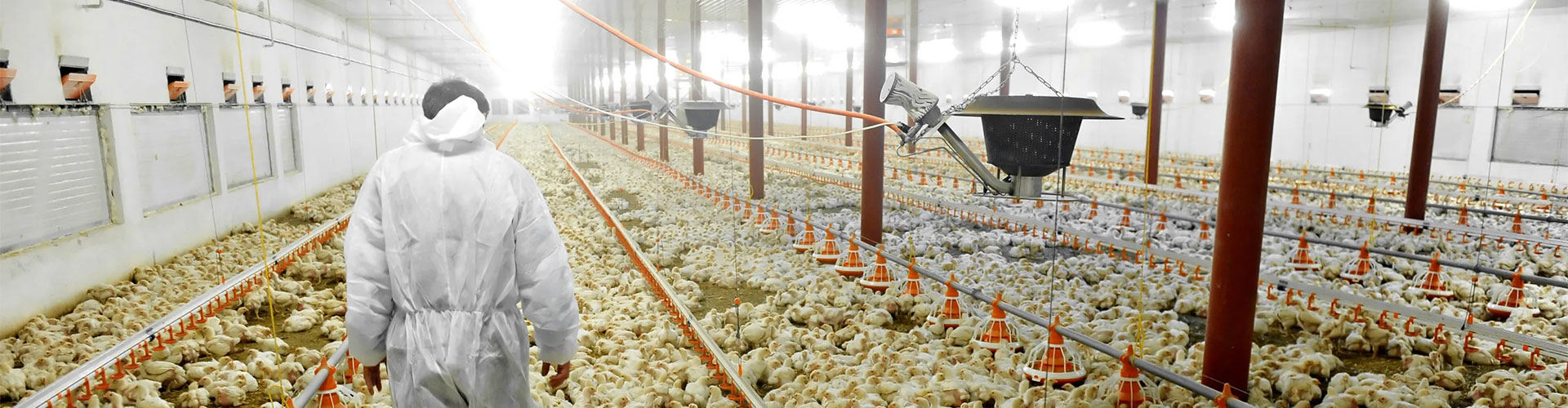
- Automated feeding - Pan feeders with auger systems deliver precise rations on a timer. Feed conversion ratio (FCR) improves when birds eat consistently rather than competitively.
- Nipple drinkers - Closed nipple watering systems cut water wastage by 50%, keep litter drier, and reduce ammonia build-up — protecting both flock health and house air quality.
- Climate control - Tunnel ventilation with evaporative cooling pads keeps shed temperature in the 24–28°C sweet spot. Every degree above 30°C costs you 3–5 grams of daily weight gain per bird.
- LED lighting programs - Programmable LED panels simulate natural light cycles, accelerating growth in broilers and boosting laying rates in layer farms by 8–12% without extra feed input.
- IoT health monitoring - Low-cost sensors track temperature, humidity, ammonia, and CO₂ in real time. Alerts before conditions become critical, preventing disease outbreaks.
- Auto-weighing systems - Automatic bird scales sample 15–30 birds per day, giving you live weight data without disturbing the flock. Catch growth deviations in day 3, not day 30.
Getting started: a practical roadmap
You don't need to automate everything at once. Follow this phased approach to minimise risk and start seeing returns quickly.
- Audit your current costs - Track feed wastage, mortality rate, FCR, and labour hours for one full batch. This baseline tells you exactly where automation will hit hardest.
- Start with water and feed - Nipple drinkers and a basic auto-feeder give the fastest ROI with the lowest upfront cost. Do these first — they typically pay back within three batches.
- Add climate monitoring - Install a IoT temperature and humidity sensor kit.
- Invest in ventilation - Once cash flow improves, upgrade to tunnel ventilation. This is the single biggest lever for reducing summer mortality in India's heat, especially May–July.
Common pitfalls to avoid
Automation fails not because the technology doesn't work, but because of poor implementation. The biggest mistakes farmers make are buying equipment without training, skipping maintenance schedules, and automating a sick flock — no sensor fixes bad biosecurity. Get your disease prevention protocols right first, then layer in technology.
Also, don't over-automate a small flock. For fewer than 2,000 birds, semi-automatic systems often give better returns than fully automated ones due to capital-to-output ratios.